sexta-feira, 9 de junho de 2017

As aves dos parques no Funchal . . ./ The birds of the parks in Funchal.

Olá passarinhos!

Hoje vou falar sobre o trabalho que está sendo realizado SPEA, em relação ao turismo ornitológico e interação da comunidade local na cidade com as aves; isto é os censos de aves nos parques do Funchal, para saber quais são as espécies que habitam ou passan através ou em torno dos parques, e que o homem pode observar.


Abaixo vou detalhar uma lista das espécies mais comuns de aves e frequentemente encontradas em nossas pesquisas nos censos estes dias, geralmente no início da manhã, quando a atividade das aves é superior. 

Também incluem-se algumas espécies que não são tão comuns, mas que podem ser vistos pontualmente. As espécies são listadas pelo nome científico, após o que também são identificadas pelo nome comum em Português, Espanhol e Inglês.


Espero que gostem e possam aprender tanto como eu!

Especies muito comuns


Passeriformes

·         Turdus merula
Melro-preto (PT)/ Mirlo común (ES) / Common blackbird (EN)


·         Serinus canaria
Canario-da-terra (PT) / Canario doméstico (ES) / Atlantic canary (EN)


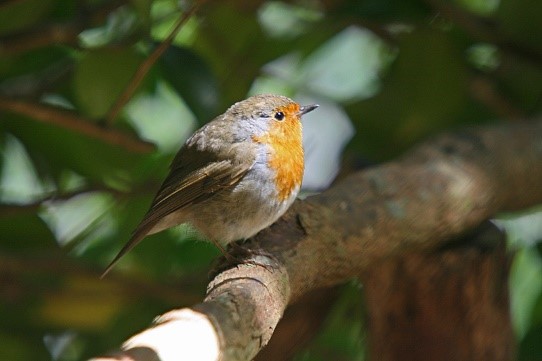
·         Erithacus rubecula
Papinho (PT) / Petirrojo europeo (ES) / Robin (EN)


·         Fringilla coelebs madeirensis
Tentilhao (PT) / Pinzón vulgar (ES) / Madeiran Chaffinch (EN)


·         Motacilla cinerea
Lavandeira (PT) / Lavandera cascañeda (ES) / Grey wagtail (EN)


Apuidiforme

·         Apus unicolor
Andorinhão da serra (PT)/ Vencejo común o unicolor (ES) / Plain-coloured Swift (EN)


Anseriformes (Especies domésticas / Domestic species)

·         Anas platyrhynchos
Pato real (PT) / Ánade real, Á. Azulón (ES) / Mallard (EN)


·         Cygnus olor
Cisne-branco (PT) / Cisne vulgar (ES) / Mute swan (EN)


Espécies que podem ser vistos ao longo fas zonas costeiras:


Charadriiformes 

·         Larus argentatus
Gaivota de patas amarelas (PT) / Gaviota patiamarilla (ES) / Herring gull (EN)


·         Sterna hirundo
Garajau (PT) / Charrán (ES) / Common tern (EN)


Falconiformes o Rapaces

 ·       Falco tinnunculus
     Francelho, Pereneiro (PT) / Cernícalo (ES) / Common krestel (EN)


Especies pouco prováveis:

Bucerotiformes

  • ·         Upupa epops

Poupa (PT)/ Abubilla (ES) / Hoopoe (EN)


Passeriformes

·         Regulus madeirensis
Bis-bis (PT) / Reyezuelo de Madeira (ES) / Madeira firecrest or Madeira kinglet (EN)


 ·         Petronia petronia madeirensis
Pardal da terra (PT) / Gorrión chillón (ES) / Rock Sparrow (EN)


·         Passer hispaniolensis
Pardal-espanhol (PT) / Gorrión moruno (ES) / Spanish sparrow (EN)


Falconiformes o Rapaces


·    Buteo buteo
  Manta (PT) / Busardo ratonero, Ratonera (ES)/ Eurasian buzzard (EN)


Fuente das fotos:


 Hi lil birds ! ! !

Today I am going to talk about a work that is being carried by SPEA, related with the birdwatching tourism and with the local community interaction with the birds in the cities; it´s about the bird census in parks in Funchal, to know which species are living or are passing by the parks or around and could be observed by humans.


In the list found above, I detailed the species of most common and most often found birds in our census, that are being made in these days, normally in the beginning of the morning, when the birds´ activity is higher. I also include some species that are not so common but eventually, if you are lucky enough, you could observe them. The species are listed by scientific name, but also their common names in Portuguese, Spanish and English are detailed.


I hope you enjoy and learn as much as I did! 


terça-feira, 6 de junho de 2017

Primeiro encontro com o Fura-bardos


As I promised last week, I'll tell you about the first time I saw the macaronesian sparrowhawk.
One morning when we went out looking for nests in the areas that had been burned. As always we were looking for the different indications of the presence of this species, in this territory we did not find any plucking, but we did find feces, which indicated that a macaronesian sparrowhawk had passed by, so with luck, we were in a active territory.

We had been walking for a couple of hours in search of the nest, without success, when Laura suddenly made a gesture for us to approach her, and told us that she had just thought she had just heard a macaronesian sparrowhawk, as we approached her, Suddenly a pair of macaronesian sparrowhawk appeared, but it all happened so quickly that I had no time to appreciate this elusive bird, the feeling was a bit bittersweet, since I had had it very close, but I had not been able to see it well.

As we could already say that it was a territory where the species was present, we decided to use ourselves thoroughly in the search for the nest, all this without separating us from the binoculars.

Finally when we thought that we were not going to see it again, we decided to turn around because the road was not in good condition to continue moving, then contrary to what might be expected, a silhouette crossed the sky with a fairly calm flight, thinking that it would be a kestrel I decided to look with my binoculars, but this was not a kestrel, he thought he was having hallucinations after having been so close to seeing it that day, since despite seeing clearly that it was not a kestrel or a common buzzard, since that body shape was different and I clearly appreciated a white breast, I thought my senses were deceiving me, but no, Laura and Marta confirmed that it was a female of macaronesian sparrowhawk, which I had been able to observe perfectly this time.


The feeling was indescribable, it was certainly one of the best experiences I have ever live on the island. So finally I can say that I have seen the macaronesian sparrowhawk, now I only need to see the male.

--------------------------------------------------------------------------------------------------------------------------
Como prometido na semana passada, eu vou te falar sobre a primeira vez que vi o Fura-bardos.

Tudo começou numa manhã quando fomos à procura de ninhos em áreas que haviam queimado. Como sempre, fomos à procura de diferentes sinais que indicam a presença desta espécie, neste território não encontramos desplumadouro, mas encontramos fezes, indicando-nos que um furabardos talvez estivesse lá.


Nós tínhamos sido um par de horas a pé em busca do ninho, sem sucesso, quando de repente Laura fez sinal para nós acercásemos ela, e nos disse que ele tinha ouvido um indivíduo, quando nos aproximamos dela, de repente apareceu um par de fura-bardos, mas tudo aconteceu tão rápido que eu mal tive tempo de ver esta ave tão esquiva, o sentimento era um pouco agridoce.


Como poderíamos agora dizer que foi um território onde a espécie estava presente, decidimos trabalhar duro para encontrar o ninho.

Finalmente, quando eu pensei que não iríamos vê-lo novamente, decidimos voltar para trás porque a estrada não estava em boas condições para continuar, em seguida, contra o que seria de esperar, uma silhueta cruzou o céu com um vôo bastante tranquila, pensando que seria um francelho decidiu olhar com os meus binóculos,mas isso não foi um francelho, pensei que ele estava tendo alucinações depois de ter sido tão perto dele naquele dia, porque apesar de ver claramente que houve um francelho ou uma manta, porque essa forma do corpo era diferente e o peito era branco, pensei que os meus sentidos estavam me enganando, mas não, Laura e Marta confirmou-me que eu era uma fêmea do Fura-bardos, que desta vez tinha sido observados perfeitamente.


A sensação foi indescritível, foi certamente uma das melhores experiências que viveram na ilha. Então, finalmente, eu posso dizer que tenho visto ao Furabardos, agora eu só preciso ver o macho.

quarta-feira, 31 de maio de 2017

Salvando o Fura-Bardos em 4x4. . .// Saving the Fura-Bardos in 4x4 . . .

Então, basicamente, vou contar-lhe a história de um grupo de motoristas de carros todo-o-terreno. . . NOOO !!! É outra vez sobre a conservação da biodiversidade!

Então, no âmbito do projecto LIFE Fura-Bardos, tivemos como parceiros iste día uma associação de motoristas 4x4 (Amigos do Camelo) que nos ajudou a remover espécies invasoras, ao norte da ilha, especificamente na Ginja (em São Vicente), onde há uma área grande de Laurissilva, o ecossistema natural onde a Fura -Bardos vive.
Quando chegamos ao ponto de encontro, havia como cinco carros todo-o-terreno. Todos eles eram grandes, poderosos e impressionantes, mas nós escolhemos o mais surpreendente, um 4x4 estilo safari, color camel, conversível de 1977.


Como eu só friolenta eu estava com medo, mas todos os meus companheiros voluntários queriam ir naquele, por isso acedei no final. E rapidamente percebi que o Safari foi a melhor de tudos! Você podia sentir o vento no seu rosto percebendo a liberdade, o sentido da natureza, e a aventura, todos os sentimentos apenas em um carro!


Quando chegamos ao lugar, os Amigos do Camelo começaram a tirar um monte de coisas dos carros, como Mary Poppins faria com a sua bolsa. . . Eu não sabia onde exatamente estavam todas aquelas coisas! Havia mesas, cadeiras, cestas, caixas com muita comida, pratos, facas, garfos, panelas, café, pão, frigoríficos...


Então, antes de tudo, Cátia explicou o que íamos fazer naquele dia, já que o Fura-Bardos é um projeto LIFE, exige manter as principais áreas onde a espécie está vivendo, mesmo que o projeto seja concluído, para garantir que os ecossistemas estão funcionando corretamente para sustentar as espécies citadas, em um longo prazo, então basicamente naquele dia nós éramos os jardineiros dessa área, removendo todas as hortênsias que são espécies invasoras, de modo que degradam o habitat natural de Fura-Bardos.


Após a explicação de Cátia, começamos a trabalhar de forma muito rápida e produtiva removendo as hortensia em vários equipes de pessoas.


Então, essas plantas tinham algum tipo de bolas como raízes (tuberculosas), e eles realmente eram muito difíceis de remover, pois você tinha que cavar muito fundo e ter certeza de que nenhum deles ainda estava dentro, porque se não, a planta voltaria a crescer, e provavelmente ainda mais forte, de modo que tentar fazer uma boa ação sem conhecimento poderia ser ainda pior do que não fazer nada.


De qualquer forma, trabalhamos tão duro, então nós realmente merecemos uma refeição fantástica como tivemos. Tentamos muitas coisas da Madeira, como a carne feita com vinho e alhos, ou diferentes bolos. Depois do café, éramos nós os que pareciam bolas tuberculosas! Nem sequer conseguíamos mover uma perna. . .


Mas nós terminamos de limpar a nossa área e, em seguida, colocamos todos os sacos cheios de plantas juntos dentro de uma casa abandonada.


Depois disso fomos para o altiplano "Paul da Serra", através de um caminho de montanha muito rochosa que foi super engraçado atravessar com os carros 4x4 de nossos Amigos Do Camelo!


Finalmente tornamos-nos amigos com os voluntários, então vamos vê-los novamente em um jantar de grupo o 9 de junho e estamos esperando para isso!!!


                                                              ⬷⬷⦽⤐⤐                                                                   


So basically I am going to tell you the story of a group of all-terrain cars drivers . . .NOOO!!! It´s again about biodiversity conservation!!

So, within the project LIFE Fura-Bardos, we worked that day with the help of an association of 4x4 drivers (Amigos do Camelo) removing invasive species, in the north of the island, specifically in Ginja (São Vicente), where there is a big area of Laurissilva, the natural ecosystem where the Fura-Bardos (Macaronesian sparrowhawk) lives.
When we arrived to the meeting point, there were like five all-terrain cars. All of them were big, powerful and impressive, but we got in the most amazing one, an old-fashioned safari-style 4x4 camel-colored car with removed convertible top from 1977.


As I get easily cold I was scared of that one, but all my volunteer mates wanted to go in that one, so I acceded at the end. I quickly realized that the safari one was the best one by so far! You could feel the wind in your face noticing the freedom, the nature-sense, and the adventure, all the feelings just in one car!


When we arrived to the place, the Amigos do Camelo started to take out A LOT of things from the cars, as Mary Poppins would do with her handbag. . . I didn´t even know where exactly were all that amount of stuff! There were tables, chairs, baskets, boxes with a lot of food, plates, knives, forks, pans, coffee, bread, fridges…
So, first of all Cátia explained what we were going to do that day, as the Fura-Bardos is a LIFE project, it requires to maintain the main areas where the species is living, even once the project is finished, to make sure the ecosystems are working properly to sustain the cited species, in a long term, so basically that day we were the gardeners of that area, removing all the hydrangeas that are invasive species, so they degrade the natural habitat of Fura-Bardos.


After the explanation of Cátia we started to work really fast and productively removing the plants in different teams.


So these plants had some kind of balls as roots (tuberculous), and they were really really hard to be removed as you had to cave very deep and make sure that none of them were still inside, because if not, the plant would regrow again, and probably even stronger, so to try to make a good action without knowledge could be even worse than doing nothing.


Anyways we worked so hard so then we really deserved a fantastic meal as we had. We try a lot of Madeira´s things like meat made with wine and garlic (vinho e alhos), or different kind of cakes (bolos). After the coffee we were the ones that looked like tuberculous balls! We could not even move a leg . . .


But we finished to clean our area and then we put all the bags full of plants together inside an abandoned house.


After that we went to the high plateau “Paul da Serra”, through a very rocky mountain way which it was super funny to come across with our Amigos Do Camelo´s 4x4 cars!


At the end that we became friends with the volunteers so will see them again in a group dinner the 09th of June and we are looking so forward to it!!!